Grok Bot vs AutoGen: One Managed Routine or a Python Group Chat
This article was produced with AI assistance. Editorial standards apply.
 AI Edited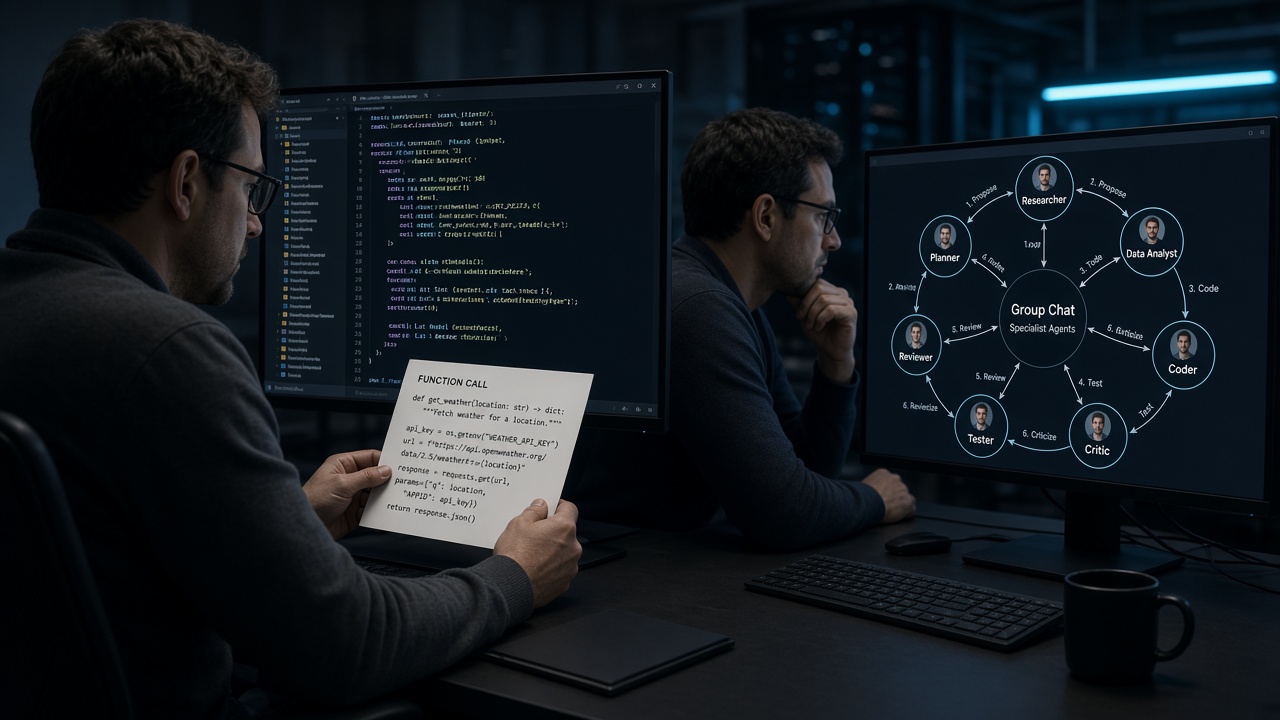
Last updated: 30 September 2026
Key takeaways
- Grok Bot vs AutoGen is one managed routine versus a Python group chat you host.
- AutoGen group chat is sequential: one agent speaks at a time, chosen round-robin or by a model.
- AutoGen is in maintenance mode. Microsoft points new projects at Microsoft Agent Framework.
- A directory skill with a dry-run is enough when one tool call must be approved before it writes.
Grok Bot vs AutoGen is a choice between a single managed routine and a Python program where several agents share one message thread and speak one at a time.
What AutoGen group chat is {#what-autogen-is}
AutoGen is Microsoft’s framework for multi-agent applications. On the AutoGen GitHub repository, Microsoft says new users should start with Microsoft Agent Framework, and that AutoGen itself is in maintenance mode. Existing projects can stay on AutoGen. New projects are steered to the successor.
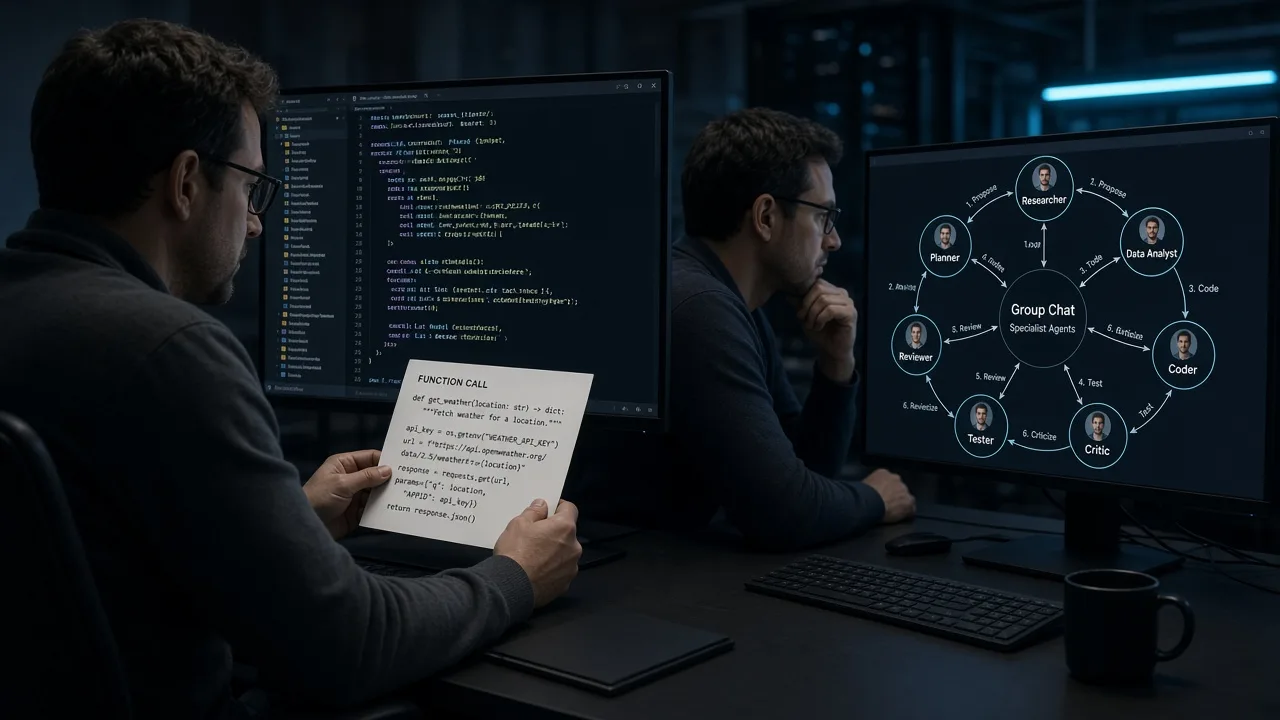
In the Core API, a group chat is a shared thread. Participants subscribe to the same topic and publish in turn. A Group Chat Manager picks the next speaker. The usual selectors are round-robin or a model. Only one agent works at a time. The high-level AgentChat API wraps that pattern: RoundRobinGroupChat for a fixed order, and SelectorGroupChat when a model picks the next speaker from each agent’s name and description. The Selector Group Chat guide says the team will not pick the same speaker twice in a row unless that agent is the only one, unless you set allow_repeated_speaker=True. A run should also set a stop, such as a max message count, so the loop cannot continue without a bound.
If you already run Python crews and graphs, the nearer comparison is Grok Bot vs CrewAI vs LangGraph. AutoGen is the group-chat shape of that same code-first choice.
Managed routine vs group chat {#managed-vs-group-chat}
 AI Edited
| Grok Bot routine | AutoGen group chat | |
|---|---|---|
| Who hosts the loop | xAI runs the model call | You run Python |
| How work is split | One skill, one tool contract | Several agents, one shared thread |
| Turn order | Not a speaker-selection loop | Round-robin or SelectorGroupChat |
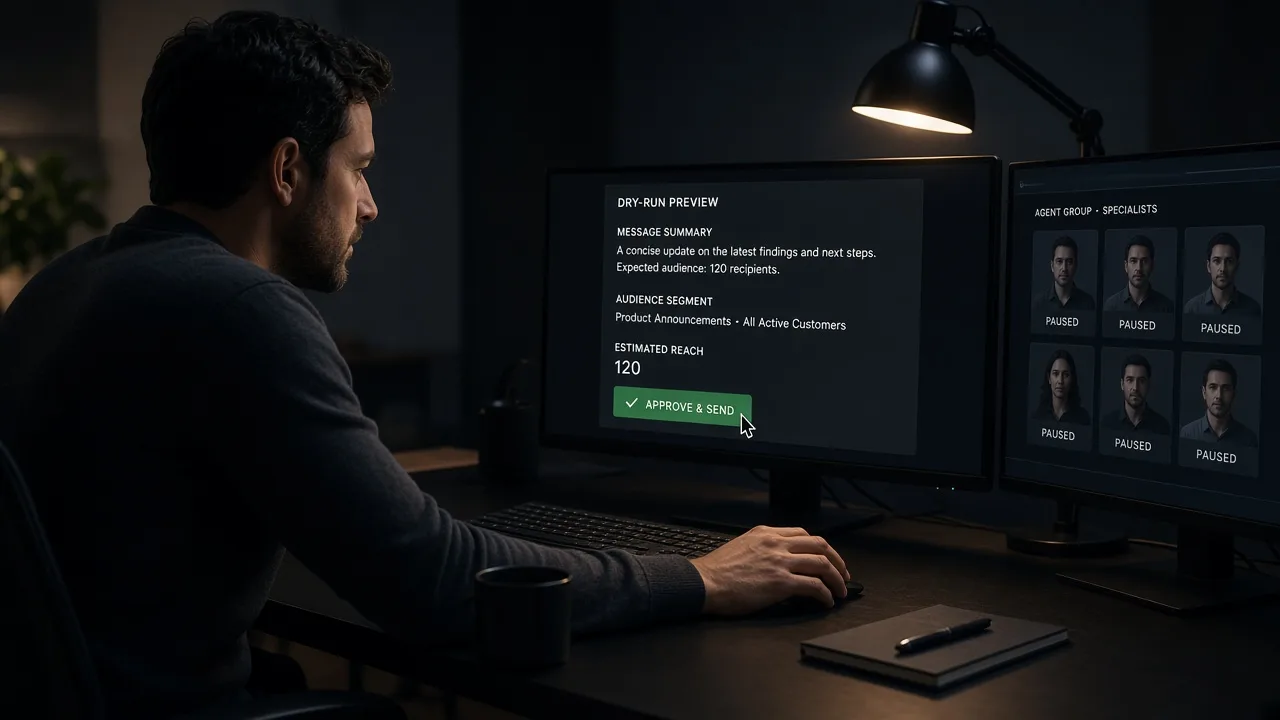
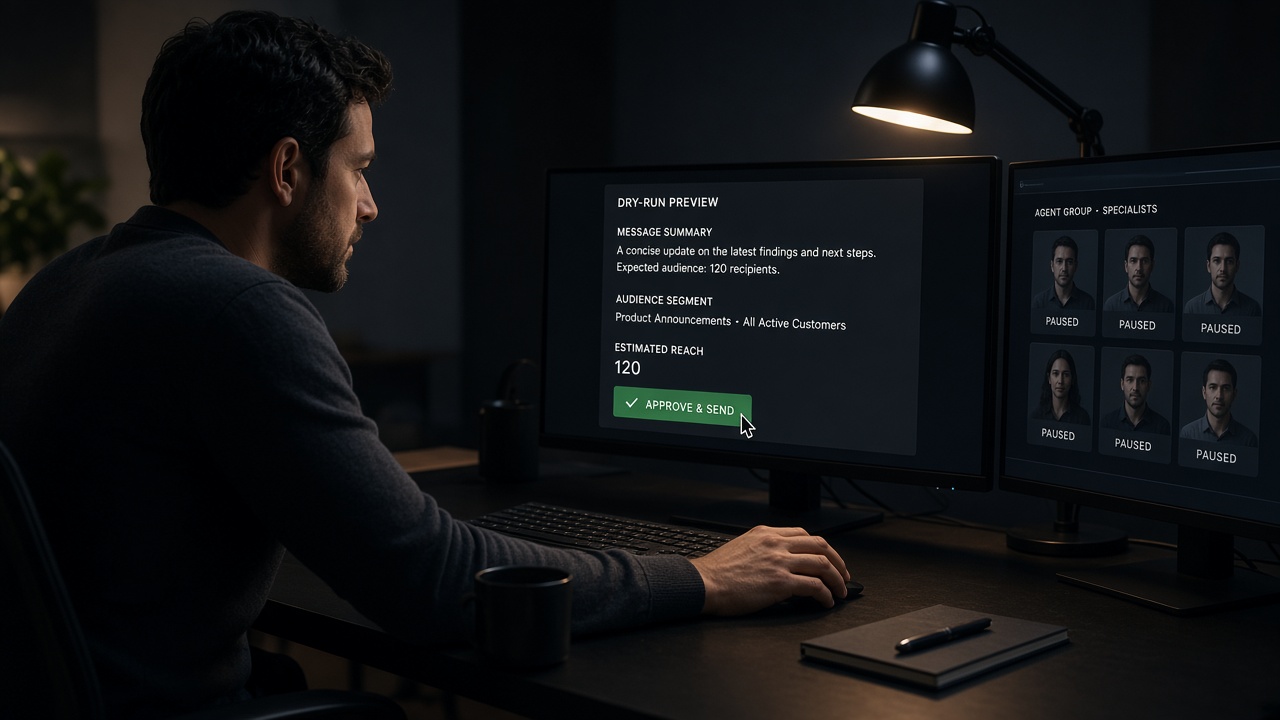
| Write safety | Dry-run preview, then your confirmation | You code the stop condition |
| Tool call | Model proposes a function; you execute it | Agents call tools inside the Python process |
xAI function calling is the Grok side of that table: the model proposes a tool, and your runtime executes it. AutoGen’s group chat does not replace that contract. It adds a speaker picker and a shared history on top of whatever model client you configure.
Verified engineering routines that stay on one skill live in the engineering hub.
When one routine is enough {#when-one-routine}
Use one Grok Bot routine when the job is a single approved write: a pull-request note, a status post, a CRM field. The operator reads the dry-run, then the tool runs once.
A group chat earns its cost when the task really is a sequence of specialists who must see each other’s messages, and you are willing to host that process and its stop conditions.
Do not start a new AutoGen project only to imitate a directory skill. Microsoft’s own repository tells new users to use Microsoft Agent Framework, and tells existing AutoGen users they may migrate. If the alternative you wanted was local weights rather than a Python swarm, read Grok Bot vs Hermes Agent.
FAQ {#faq}
Does AutoGen replace a Grok Bot skill?
No. A skill is one typed routine with a dry-run. AutoGen is a Python framework that runs a conversation among agents you define.
Is AutoGen still the recommended start?
The GitHub project says new users should start with Microsoft Agent Framework. AutoGen remains available in maintenance mode.
Do agents in a group chat speak at the same time?
No. AutoGen’s group-chat pattern is sequential. One participant publishes, then the manager selects the next speaker.